Google Ads is one of the most powerful tools businesses can use to drive targeted traffic, generate leads, and increase sales. But when it comes to buying Google Ads accounts, it’s easy to get caught up in the idea of quick results. The reality is that purchasing an established Google Ads account can be risky without proper knowledge and due diligence.
In this article, we’ll break down some of the most common mistakes people make when buying new or aged Google Ads accounts. Understanding these pitfalls will help you avoid wasting money, getting stuck with a poorly performing account, or even facing policy violations. By the end, you’ll be better equipped to make informed decisions that improve your ROI and ensure account safety.
The Basics of Google Ads Accounts
Google Ads is an essential tool for businesses looking to increase their visibility online and attract potential customers. To get the most out of this platform, it’s important to understand the basics of how Google Ads accounts are structured and how account quality can impact your results.
At its core, a Google Ads account typically includes the following elements:
Campaigns: The Backbone of Your Google Ads Empire. Campaigns are like the big boss of your Google Ads account. They set the tone and direction for everything that follows. Each campaign can have multiple ad groups to target specific goals, whether it’s driving traffic, collecting leads, or boosting sales. Don’t forget to fine-tune your location, device settings, and bidding strategies in each campaign to keep things running smoothly.
Budgets: Don’t Let Your Wallet Cry. Your budget is the magic number that tells Google how much you’re willing to spend. But just like your credit card bill, you need to keep a close eye on it. Proper budget management ensures you don’t end up spending more than you need while still getting decent results. And remember, you can always adjust budgets based on how things are performing—so no need to set it and forget it.
Ad Groups: Stay Organized or Pay the Price. Ad groups are where the magic happens—where your ads and keywords come together to make a difference. If you don’t organize them properly, you’re basically throwing spaghetti at the wall and hoping something sticks. Keep each ad group focused on one theme, and you’ll see better targeting, higher Quality Scores, and fewer headaches down the road.
Keywords: Choose Wisely, Young Grasshopper. Keywords are your golden ticket to reaching the right people. But don’t just throw a bunch of random words in there and hope for the best. Do your research! The right mix of broad, phrase, and exact match keywords is the secret sauce to getting your ads in front of the right audience. So, choose wisely, and don’t waste your budget on the wrong traffic.
Ad Copy: Say It as You Mean. Your ad copy is your first impression—and first impressions count. If your ad isn’t compelling or relevant to what people are searching for, don’t expect them to click. Keep it snappy, make it relevant, and make sure it ties back to the landing page. If you don’t, you’ll be leaving money on the table and wondering why no one’s biting.
Performance History: Learn from the Past (So You Don’t Repeat It) The performance history of your Google Ads account is like your personal journal of past successes and failures. Dig into past campaigns, ad groups, and keywords to see what worked and what flopped. Looking at Click-Through Rates (CTR), Conversion Rates, and Quality Scores will help guide your future decisions. In short, don’t ignore your account’s history—it’s like having a cheat sheet for success.
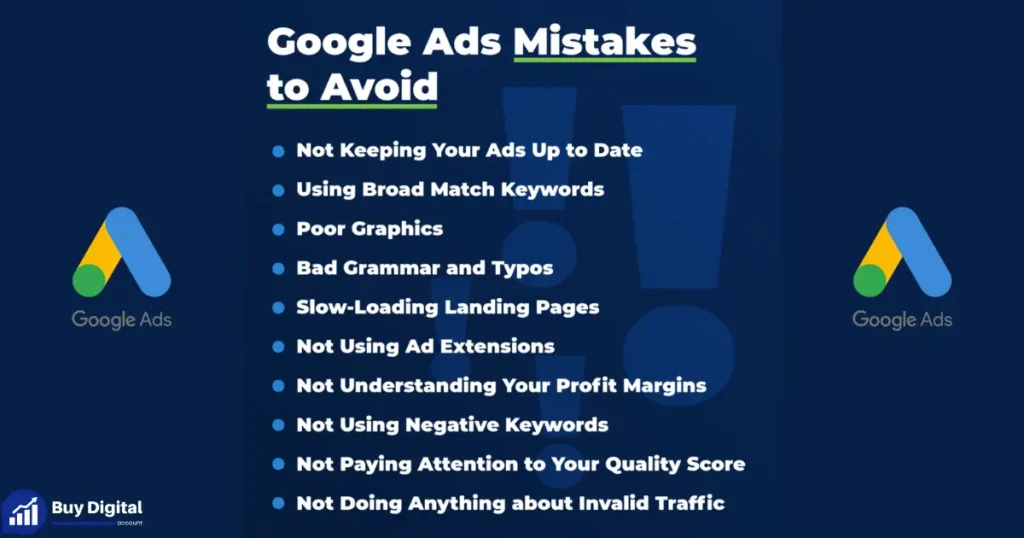
Common Mistakes to Avoid When Buying Google Ads Accounts
1. Improper Keyword Targeting
One of the biggest mistakes I see when people buy Google Ads accounts is improper keyword targeting. It’s easy to assume that more keywords mean more traffic, but if you’re targeting the wrong terms, you’re just throwing money away.
The issue often comes with broad match keywords, which can be tempting because they show your ads to a wider audience. But if you’re not careful, broad match can end up displaying your ads to people who have zero interest in what you’re selling. You’ll get clicks, sure, but they’re probably not the kind of clicks that turn into leads or sales.
And don’t get me started on phrase match keywords. Some people think they’re a nice middle ground between broad and exact match. In reality, they often miss the mark, sending traffic that’s irrelevant or low quality.
Solution: When buying an account, it’s critical to check the keywords and make sure they’re targeted to the right audience. Look for a mix of high-intent keywords and make sure they align with what you’re actually offering. It’s a lot better to go for fewer, more relevant keywords than to cast a wide net and hope something sticks.
2. Budget and Bidding Management Issues
Another common mistake I see when people buy Google Ads accounts is poor budget and bidding management. A lot of accounts are set up with unrealistic budgets or bidding strategies that just don’t work well anymore. For example, I once reviewed an account where the previous owner had set a $5 daily budget for a highly competitive industry like legal services. No surprise, it wasn’t getting nearly enough traffic to drive meaningful results. At the same time, the bidding strategy was set to Manual CPC, which in that market meant paying more than necessary for each click and ultimately getting very little return.
It’s tempting to set a low budget to test things out, but if your budget is too tight, your ads won’t get enough visibility to really make an impact. On the flip side, setting an overly generous budget without the proper bidding strategy can quickly burn through cash without seeing the returns you want.
Bidding strategies also play a huge role. If the account’s been using outdated strategies like Manual CPC without considering the current competition and goals, you’ll likely be overpaying for clicks that don’t bring in quality leads.
Solution: Before buying any account, you need to double-check how the budget’s been set up. Are the daily limits in line with your goals? Is the account using the right bidding strategy—Maximize Conversions or Target CPA, for example, might be a better fit than simply going for clicks.
In short, take a hard look at the budget and bidding structure. Make sure it’s realistic and aligned with your performance goals, or you’ll end up wasting money without seeing solid results.
3. Neglecting Negative Keywords
I can’t tell you how many times I’ve seen accounts with barely any negative keywords in them. The thinking is usually something like, “I’ll let Google show my ads to anyone who might be interested, and I’ll just filter out the bad stuff later.” Spoiler alert: that doesn’t work.
Without negative keywords, you’re leaving your ads open to all sorts of irrelevant clicks, which will burn through your budget without delivering results. For example, I once reviewed an account where they were running ads for “web design” but had no negative keywords like “free,” “cheap,” or “DIY.” Guess what? The ads were showing up for people looking for free web design templates, which obviously wasn’t the target audience. They ended up paying for clicks from people who weren’t going to convert.
Solution: When buying an account, make sure there’s a solid list of negative keywords. This should include anything that’s not relevant to your offering or could waste your spend. It takes a little extra time upfront, but it’s a game-changer when it comes to improving your ROI and ensuring your ads only show up for genuinely interested people.
4. Improper Conversion Tracking
One of the most frustrating mistakes I see when buying Google Ads accounts is improper or, even worse, non-existent conversion tracking. Without conversion tracking, you’re essentially flying blind. You might be getting clicks, but you won’t know if those clicks are actually turning into sales or meaningful actions on your website.
I once reviewed an account where there was no conversion tracking set up at all. The account was getting plenty of clicks, but there was no way to tell if those clicks were leading to actual customers. After we set up proper tracking, we found that most of the clicks were coming from people who were just browsing, not interested in making a purchase. The account owner had been paying for these unqualified clicks for months without realizing it.
Solution: When buying an account, always make sure conversion tracking is set up correctly. This includes tracking things like purchases, form submissions, or phone calls. Without this, you’re just guessing whether your ads are working. Trust me, guessing rarely works out. Setting up conversion tracking right away ensures that you have the data to make informed decisions and optimize your campaigns effectively.
5. Geotargeting/Location Mistakes
Another mistake I see all the time when people buy Google Ads accounts is poor geotargeting. If your location settings are off, you could be wasting money showing ads to people who are nowhere near your business, or worse, people who aren’t even in your target market.
For example, I once looked at an account for a local plumbing business in Chicago. Their ads were set to target the entire United States. As you can imagine, they were paying for clicks from people in California or New York—completely irrelevant to their business. Not only was this wasting their budget, but it also hurt their ad performance in terms of quality scores and ROI.
Solution: Before buying an account, check the geotargeting settings and make sure they align with your business’s actual reach. If you’re a local business, narrow it down to your city or region. If you’re operating nationally, make sure you’re only targeting the right states or zip codes. Proper geotargeting will save you money and ensure your ads are reaching the right people.
6. Poor Ad Copy or Lack of Testing
I can’t stress this enough: ad copy is everything. If your ad copy isn’t compelling or relevant, no one will click. And if you’re not testing different versions to find out what works, you’re leaving performance on the table.
Take, for example, a company I worked with that was running ads for “fitness equipment.” The ad copy simply said “Buy Fitness Equipment Online.” Not bad, but not great either. After running some tests with more specific and engaging ad copy, such as “Find Affordable Treadmills for Home Use” or “Shop Quality Gym Gear with Free Shipping,” we saw a dramatic increase in click-through rates.
Solution: When buying an account, always check the ad copy and make sure it’s optimized to speak to the right audience. If the account owner hasn’t tested different variations of the copy, be ready to run your own tests and find what resonates best with your audience. A little testing goes a long way in improving performance and driving more conversions.
7. Using Unoptimized Landing Pages
You could have the best Google Ads campaign in the world, but if your landing pages aren’t up to par, it’s all for nothing. Generic or unoptimized landing pages are a major red flag when buying an account. If the landing page doesn’t match the ad or isn’t designed to convert, you’ll see high bounce rates and low conversion rates. That means you’re paying for traffic that’s never going to stick around.
For instance, I once took over an account for a business selling custom-made furniture. Their ads were well-targeted, but their landing page was just a generic homepage. No specific details about the product, no clear call-to-action—just a vague “shop now” button. After optimizing the landing page to focus specifically on the ad’s offer, with clear product images and a direct call-to-action, conversions increased significantly.
Solution: When buying an account, take a close look at the landing pages. Are they relevant to the ads? Do they load quickly and provide a good user experience? If not, you’ll need to invest time in optimizing them to make sure your traffic converts. A well-designed, relevant landing page is just as important as a well-targeted ad.
8. Blindly Following Auto-Recommendations or GAMs
Here’s a mistake that’s easy to overlook but can be a real budget killer: blindly following Google’s auto-recommendations or relying too heavily on Google Ads’ Auto-Management Features (GAMs). Google is all about pushing you toward automated solutions because it wants to make your life easier. But just because something is automated doesn’t mean it’s the best choice for your business.
I’ve seen accounts where Google suggested “improving performance” by automatically increasing bids or broadening keyword match types. In one case, the system started bidding too aggressively on low-converting keywords. The result? The client’s budget was drained on clicks that didn’t lead to any sales. Sure, it might have been easy to follow Google’s recommendations, but it certainly wasn’t effective.
Solution: When buying an account, don’t just accept everything Google suggests. Take the time to analyze the recommendations and make sure they align with your goals. Automated features can be helpful, but they’re not always the best solution for every business. Sometimes, a little manual tweaking and control can go a long way in improving results.
9. Including Search Partners or Display Network Inappropriately
Google loves pushing you toward expanding your reach by enabling Search Partners and the Display Network, but here’s the thing: not all clicks are created equal. These networks can be great for certain campaigns, but for new accounts or specific goals, they can quickly waste your budget on irrelevant traffic.
I once took over an account where the ads were running on Search Partners, which are sites outside of Google’s main search engine. The clicks were cheap, sure, but they came from websites that had nothing to do with the client’s industry. As a result, the conversion rate was dismal, and the budget was bleeding out on clicks that didn’t matter.
Solution: Before buying an account, check whether Search Partners or the Display Network is enabled. If they aren’t needed, turn them off to keep your budget focused on the most valuable traffic. You don’t need to reach everyone—just the right people. Focus your ad spend where it counts most, and avoid wasting money on irrelevant networks.
10. Not Regularly Monitoring or Analyzing Performance
This one is simple but crucial: If you’re not regularly checking in on your account’s performance, you’re basically asking for trouble. Too many people set their campaigns and forget about them, assuming things will just run smoothly. But Google Ads is a dynamic platform, and without regular monitoring, things can go south quickly.
I once reviewed an account that had been running for months without any significant changes. The ads were still targeting outdated keywords, the budget was way too low, and the bidding strategy hadn’t been adjusted to account for competition. The account was bleeding money because no one had been paying attention to its performance.
Solution: When buying an account, make sure the previous owner has been actively monitoring and optimizing it. If not, you’ll need to step in and make it a regular habit to check your campaign data. Look at things like Click-Through Rates (CTR), Conversion Rates, and Cost-Per-Click (CPC), and be ready to make adjustments as needed. Regular analysis is the key to getting the best results and making your ads work harder for you.
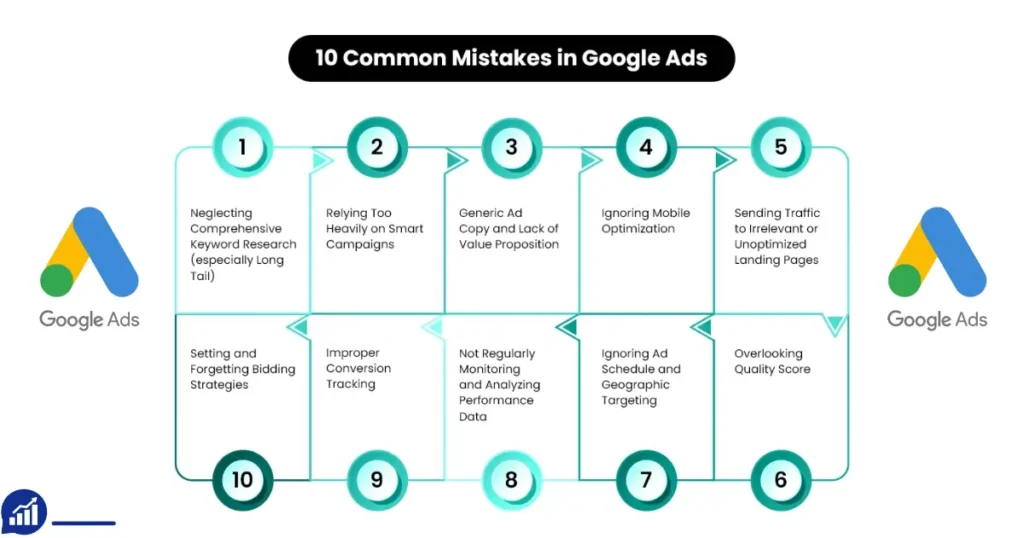
Tips for Safely Buying and Optimizing Google Ads Accounts
Buying a Google Ads account can feel like a shortcut, but without the right checks, it could end up being a huge time and money sink. Do your homework first, and you’ll set yourself up for success. Here’s what you need to know:
1. Check the Account’s History First
Before you buy an account, you need to dig into its history. Check for things like past campaign performance, any keyword targeting used, bidding strategies, and any issues with policy violations.
For example, let’s say you’re looking at an account for a business in real estate. If you see a campaign that has thousands of clicks but only a handful of conversions, that’s a huge red flag. It could mean poor targeting or bad ad copy that’s driving the wrong audience.
If the account has a history of poor performance or violations like misleading ads, you’ll want to walk away. It’s better to start fresh than deal with ongoing problems.
2. Look for Clear Performance Data
Always look for clear, transparent performance data before you buy. You want to see how campaigns, keywords, and ads performed. If a seller can’t provide this, it’s a red flag.
For example, if the account owner can show you a steady CTR of 3% or more on high-intent keywords like “buy luxury watches,” you know the account has been managed well. But if they’re hesitant to show any data, it’s time to be cautious.
When you’re reviewing an account, ensure the seller can provide detailed performance data. If they can’t, that’s a huge red flag.
3. Do a Quick Check and Tweak Things Right Away
Even if the account seems fine, don’t assume it’s perfect. A quick audit and some tweaks will go a long way. Here’s what I’d check:
- Keywords: Are there keywords in the account that are too broad, like “services” or “products”? Those will eat through your budget without providing any real results. I once reviewed an account where the keyword list included “best restaurant,” which was way too general for their targeted local business.
- Ad copy: Does the ad copy match the target audience? If the ad copy doesn’t speak directly to your ideal customer, it’s time to revise it.
A quick review and a few changes can make a big difference in improving results.
4. Set Up Conversion Tracking (and Double-Check It)
If the account you’re buying doesn’t have conversion tracking set up, you’re flying blind. I had a client buy an account that had no conversion tracking at all. We had no clue if their ads were bringing in sales or just clicks. After we set up conversion tracking and connected Google Analytics, we found out that their ads were getting a lot of clicks, but no one was actually buying.
If you don’t see any conversion actions set up, fix that right away. This simple step will give you data on what’s working and help you optimize better.
5. Keep Optimizing, Don’t Just Set It and Forget It
Buying an account might seem like a quick win, but don’t just let it run without checking in. I once worked with a client who bought an account, and they left it running without reviewing it for months. Their ads were outdated, and the keywords weren’t performing well anymore. After stepping in, we updated their bidding strategies, refreshed the ad copy, and focused on high-converting keywords.
Conclusion
Buying a Google Ads account can be a great way to jump-start your campaigns, but only if you approach it with caution. By doing your due diligence, checking the account’s history, and making the necessary optimizations right away, you’ll be in a much better position to see good results. Don’t skip the steps—taking the time to properly assess and fine-tune the account will pay off in the long run. Happy optimizing!